Friday, March 5, 2021

Once Upon a Walk Report - Part Three

 Ah ha! We meet again... 

I have now lost track of how many photos I have purged due to redundancy and other factors. I've gone through 13 or 14 folders and it looks like I have another 12 to go. I could figure it out with some accuracy but it's not worth it. Guesstimate? Somewhere close to 60,000 photos have been forever tossed into the digital netherworld. No regrets. 

Last OUaWR I indicated I had finished 2014 but that was not true, there were a few more in the next folder. The folders are sorted by the image name the camera hands out and not necessarily by date since the camera goes from IMG_0001.JPG to IMG_9999.JPG. I've always manually imported from the camera's SD card into folders on my iMac. Whenever a folder says a file by the same name already exists, that's when I start a new folder. The last folder contained about 9,800 images.

Anyway, here are the photos I selected. Not everything is from bygone walks some of this is from bygone wildflower gardens around the homestead. Again, dates are in the captions.

There's a duck in there somewhere!

122314

  What do you know? It's the famous Eric Duck.


And close by we find the lovely and demure Docken Duck. Both human Eric and human Docken really miss these ducks.


Okay, now it's official. We're into 2015. Kalanchoe delagoensis, AKA. Chandelier-Plant.

011115

Back at home, the ox eye daisy plants (Leucanthemum vulgare) were starting to bud. I think I might have done this before with an image of these. But look at it, how could you not see that? Leucanthemum vulgare are starting to bud with a few opening again right now but with the limited rainfall this season (4.11" to date), almost no collecting of seeds from last year and zero seed purchasing, I don't think there's going to be much of a show.

010915

"I didn't break it. It was like that." Male Calypte anna (Anna's hummingbird).

011115


Gilia tricolor, one of my favorite flowers to photograph. It was especially nice to see bees get covered in blue pollen. The flowers are approximately 2 cm in diameter.

030415

030415

Since neither of the above images show off the blue pollen, here's one from 2013. I suspect the yellow pollen you see in the above images is from nearby Dimorphotheca sinuata flowers. 


Another favorite flower for picture taking, Linum grandiflorum or scarlet flax. There's an illusion to this flower. Are the petals convex or concave? Look at this image, you can mentally flip the petals. As if it were an open umbrella. Are you looking at the umbrella from the top or from below the umbrella canopy?

030915

 Of course, you're under the umbrella.
 
021815

I haven't seen any of these in some time. They were once everywhere. Nemophila menziesii, known commonly as baby blue eyes or baby's-blue-eyes.
 
021315
 
 Vanessa cardui butterfly on Centaurea cyanus, commonly known as cornflower or bachelor's button.
 
040215

Danaus plexippus, AKA, the monarch butterfly on Salvia leucophylla.

040515


040515

 Honey bee on Dimorphotheca sinuata.
 
021521

Cooperative insects and birds: It's always nice, especially when the lighting is good, to have congenial subjects that hang out for prolonged photo sessions. I'm not sure how many images I started with of this blue-eyed darner (Rhionaeschna multicolor) dragonfly but I ended up keeping 80 shots.


Bulbine frutescens is a species of flowering plant in the genus Bulbine, native to southern Africa. Hey! I actually donated to Wikipedia once.
 
050115
 
I never got an ID on this cactus.
 
021515
 
 Pieris rapae or the cabbage white butterfly. I have a special fondness for these butterflies. The sage is
Salvia mellifera or black sage, a California native.

022815

022815
 
Light, oh how the light can change everything. This small daisy, about the size of a nickel, was the only plant of it's kind in the side yard in 2015. The second image was taken one day after the first, about 1.5 hours later in the day.

022515


022615

The back yard has been the hot spot for poppies for the past several years. Mostly Papaver rhoeas,
Papaver nudicaule, Papaver orientale and an occasional Eschscholzia californica plant or two.

042415

042415

042415

These are Calendula officinalis flowers in the process of unfolding.


Another favorite flower mentioned here before, Linaria maroccana or baby snapdragons or toadflax if you prefer using a really ugly name.

022215

I also mentioned in a previous edition of this little project that I was going to plant some Linaria maroccana seeds indoors to be moved outdoors once A.M. temps are slightly more accommodating. Here they are. There are 10 cells like this in the seedling starter tray. The giant white chunks are actually small pieces of perlite.

030121

 The front yard four days before the March equinox, 2015.

031615
 
When I first started this urban meadow idea it was done with my mother in mind. I wanted to scatter some beauty about which would be right outside the windows for her to see. This started in 2012 with my using an electric cultivator on the property and going over front, side and backyards several times. The ground was mostly hard, mostly clay and the cultivator would often bounce around like a jackhammer on steel plates. Then there was the hand pulling and raking of deeply embedded weeds. After that there was the introduction of mulch provided by the city shoveled by me onto the sheet covered rear of my tired old Jeep Cherokee. Seeds were purchased from the local big box hardware store and were scattered mid-October of 2012 when the first rains arrived. The earliest flowers, mostly California poppies, began opening as we entered March of 2013. Eight years ago today on March the 5th, 2013 I ended up describing these first blooms to my mother, she was lying in bed unresponsive. She was shutting down and it became almost instinctively apparent to me that I needed to tell her about the beauty appearing outside of her home, about arrangements that were made by my sister so she would know she was going to be placed near our father, to tell her how much I loved her and how important she had been in my life. I knelt on the floor holding her gently as the hospice nurse was outside organizing for her visit. She passed as I was escorting the nurse into the house. 

Saturday, February 20, 2021

I'm going to tell you a story


Not all of this story is necessarily accurate but it is and it remains as I have remembered it for most of my life. I have a clear vision of this event and it’s always the same. I can’t tell you how long my participation was but I do recall a certain degree of waiting in anticipation. The anticipation of a child warps time. The event itself was mere moments. Could it have been 10 seconds, could it have been close to a minute? I couldn’t say but it seemed to be long enough. There are also pieces of this story which I have had to build by reviewing historical data much later in life.

On August 12, 1960, NASA launched a communications satellite from Cape Canaveral, Florida. The launch was a second attempt to position a satellite designed as a passive communications reflector to relay transcontinental and intercontinental telephone, radio, and television signals between points on Earth. The first, failed attempt, was made in May of 1960. That satellite was named Echo 1. The successful launch in August was dubbed Echo 1A. Both Echo 1 and Echo 1A were basically reflective Mylar 100’ wide balloons. They were nicknamed “satelloons”. Within a few hours of launching Echo 1A reflected a radio signal from somewhere over California to Bell Labs in New Jersey. The message was an address from then US President Dwight D. Eisenhower in which he said, “The satellite balloon, which has reflected these words, may be used freely by any nation for similar experiments in its own interest.”

Echo 1A was also visible to the naked eye over most of the planet. On Friday, August 12, 1960 I was four years and just about four months old. I don’t know what day exactly my experience with Echo 1A took place. Perhaps it was that hallowed Friday. What I did know was, this was something really special. It was explained to me why it was important before going outside. Whatever evening it was we knew where to stand and when to look up to the sky—you know, give or take. That we was me, my dad and the a guy who lived next door named Ted. Ted was the guy with the binoculars. I recall testing the binoculars out and that they didn’t really work for me. I remember my dad holding the back of my head and watching a tiny dot move through space. Or, I convinced myself that I saw it. What I remember most vividly was being on the front lawn, maybe 50’ from where I am sitting right now, looking into the southern sky on a clear early evening and experiencing something that I could feel was the future, with my dad, and knowing that my dad was excited about it. Oh and there was Ted but I remember keeping my distance from neighbor Ted. Ted had some issues.

So, why did I decide to write this event down now? Well, I had a recent email discussion, be it brief, about memories and how we remember things, pointing to a study out of Northwestern University several years ago which basically stated that each time we remember something it’s actually a reflection of the last time we remembered it. What I didn’t mention was, I don’t entirely believe that to be true. This story I’m telling is just one of many where I see the same visual every time I recall the scene. It’s a moving picture. Anyway, that discussion had me going on memories for days now but the biggest trigger for recording this particular event was the landing of the rover Perseverance on Mars. I just watched that for a second time. Most space missions of major significance, maybe even some minor ones, have had me flashback on the Echo 1A experience. There’s a part of me that lives in wonder—questioning, there’s a part of me that lives in resentment and there’s a part of me that grieves the loss of my dad to a tragic automobile accident just shy of six months after the launching of Echo 1A. And there is another echo in this story, it’s my mother’s voice saying, your father would have really liked to have seen this. 


Saturday, February 13, 2021

Once Upon a Walk Report - Part Two

 Part One explains what's going on here in excruciating detail so, in case you missed it, here's the link Or, just scroll down beyond this post.

This last round of folder cleanup took me into 2015. These are the final images I decided to choose from 2014. Again, the dates are in the captions.


Monarch butterfly (Danaus plexippus)

081714

Leptotes marina or blue marine butterfly. This was a day full of mating activity, hence the open wings. The plant is Calliandra californica. AKA, the Baja fairy duster.

082414

Gulf fritillary or passion butterfly. I love the contrast between open and closed wings on these butterflies.

082314

This is an immature male Allen's hummingbird (Selasphorus sasin). I really liked the background in these images. I took a ridiculous number of pictures of this bird on this day.

082414


This paper wasp (Polistes exclamans) is probably the only picture I've ever taken of one in flight. Notice the chunks taken out of the eucalyptus leaves, that's the work of this little fellow. Generally speaking I like paper wasps. I think they're really well designed.

082714

Southwestern fence lizard hanging out on the trunk of an olive tree.

082714

Another very cooperative Leptotes marina butterfly. I was sitting rather uncomfortably on the ground for this one.

083014

 Pyrgus communis, the common checkered-skipper. "Common" that seems a little bourgeois, doesn't it?

092814

For the life of me I cannot find an ID for the shrub or tree these flowers belong to. Supposedly it's a California native. This particular unit is about 8' tall and it has really nasty thorns. Anyway, the bee was cute and was having a grand time frolicking in the flowers.

111514

Yes, this is a banana peel but it's really much more than that. It's also part of a rather dystopian story regarding an evolutionary path that the simians of infraorder Simiiformes are engaged in. This was a recurring private joke Docken and I had going. Or was it a joke?

101714

Stay tuned for Part Three.


Sunday, January 24, 2021

Once Upon a Walk Report - Part one

I have a confession to make, while I believe I'm a good photo editor I'm not good at all when it comes to throwing away pictures which have no merit. I take pictures and put my energy into the photos I like and ignore those, for the most part, that either suck, are redundant or are intended to be exported into a photomerge process--a panorama or a focus stack of images. So, multiple images designed to become one. Part of this is due to my wanting to pay attention to the images I care to use for this blog or for some other purpose and part of it is due to the slow process of deleting images within Adobe's Bridge program. Adobe Bridge is a digital asset management application and a companion program to Adobe Photoshop. Adobe Bridge is my lightbox.

Here's what happened... I would like to buy a hard drive but I'm not inclined to spend the money right now AND it's a little more complicated than that. Consolidating data might bide me some time. I've also thought that purging useless data and cleaning up a bit would be a good idea on a number of practical levels. The review process alone would give me a better idea of where to find stuff. So... I started in on the folders connected to Adobe Bridge. There are some ancient photos but most of the stuff in Bridge is from 2010 up until today. There are 30 folders I want to clean up, each folder may contain as many as 10,000 images. Deleting unwanted images from large folders can take close to a minute per edit. It doesn't matter if I'm sending one image or 100 to the trash... it's so freakin' slow. This is a function of the way Bridge caches previews of images. As I progress through a folder it starts to speed up but even once I get down to the last few hundred it remains a laborious process. One which I don't have a lot of patience for. The drive these folders reside on is a mere 2 TB and it was a lot fuller than I would have liked. Free space was perhaps as little as 70 GB. FYI, it's generally a good practice to leave about 20% free space on a hard drive. I have an app called Drive Genius that says this drive isn't especially healthy, although Apple's Disk Utility doesn't seem to think it has a problem. This drive also contains my iTunes library. That's mostly backed up on a portable drive or two. Nevertheless, that's another project. 

Here's where this is going... Off the top of my head I'd estimate I've thrown away about 40,000 images so far. This has taken 10s of hours over the course of about 3.5 weeks. I've freed up about 215 GB of space on the drive and I'm only up to August of 2014. I have 15.33 folders to go. There's some satisfaction in the organization process and it was cathartic purging a bunch of shitty and or redundant or otherwise unnecessary images. But there was something else. It was incredibly emotional. I relived some joyous days but there were more overwhelming recollections that brought forth sadness, grief and a sense of absence. Without providing a lot of detail, suffice it to say, these emotions were sparked by images of people, places and pets. There were often feelings of loss. Sadness seemed to have a way of overpowering some of the fonder memories. The general pervasive atmosphere influenced by a tragic family event, the pandemic and the current sociopolitical climate amplified the situation.

Photographs I’ve taken have always had a way of transporting me vividly back to the moment I took them and to moments surrounding those moments. The camera is a time machine. I’m expecting more of this as I move through another six plus years of photographs. 

Finally, here's the deal. I picked out some images along the way, for a variety of reasons. Some of these same images or similar shots might be in walk reports from the past. I'm not going to bother looking. I've organized them by dates. So far these are not images that made me sad but I probably wouldn't tell you if they did. This is part one. Any other parts to this story will be pretty much just pictures and some descriptions. Whew! Right?

_____________________________________________


I changed my mind. The images won't be sorted by date taken. The date will rather be presented in the leading description or the caption.

062113 (that's month, day and year and I've been using that format for years, okay?) This egret seemed to be following me that day. Earlier I took dozens of images of this bird down below at the botanical garden.


080213

Coyotes were a fairly common sighting 2013-14. Then it became more of a rarity. I saw a coyote walking rather casually on the sidewalk in front of the house early into the pandemic. That never feels normal.

080213

This is Kevin, taken 081113. Docken and I heard from Kevin for quite some time before we ever saw him. We were told that the American bullfrogs in the pond were all males but we later questioned that theory.

This appears to be Kevin and his mate. Since American bullfrogs are very territorial I suspect this was not another male. Altough, there's nothing wrong with that if it were.

082213

 
Cardinal meadowhawk, 081813

Cotinis mutabilis (Green fruit beetles) devouring a Prunus ilicifolia (Catalina Cherry).

081813

Red-tailed hawk, 082213

Gulf fritillary, 082313

Red-tailed hawk, 082313

This picture is sort of half-ass but I like it.

090113

Gulf fritillary. 090213

122413

This is a 9 image focus stack I did during the purge, just because. These are Linaria maroccana flowers (baby snapdragons). I have a few Linaria maroccana seeds from last spring that I plan to start indoors within the next several weeks.

021314

We don't know how the catus got broken but Docken made this cute little bunny out of this piece. It cracked me up when I saw it.

022114

Mourning dove, 041414

Dandelion and sweet alyssum, 033014

Egret, 040914

Calypte Anna, 041214

Kalanchoe delagoensis, formerly known as Bryophyllum delagoensis and commonly called mother of millions or Chandelier plant.

041814

041214

This common raven and red-shouldered hawk (Buteo lineatus) were definitely not birds of a feather. In flight the crow generally establishes an aggressive posture while the hawk goes about its business until it's out of range. 041914


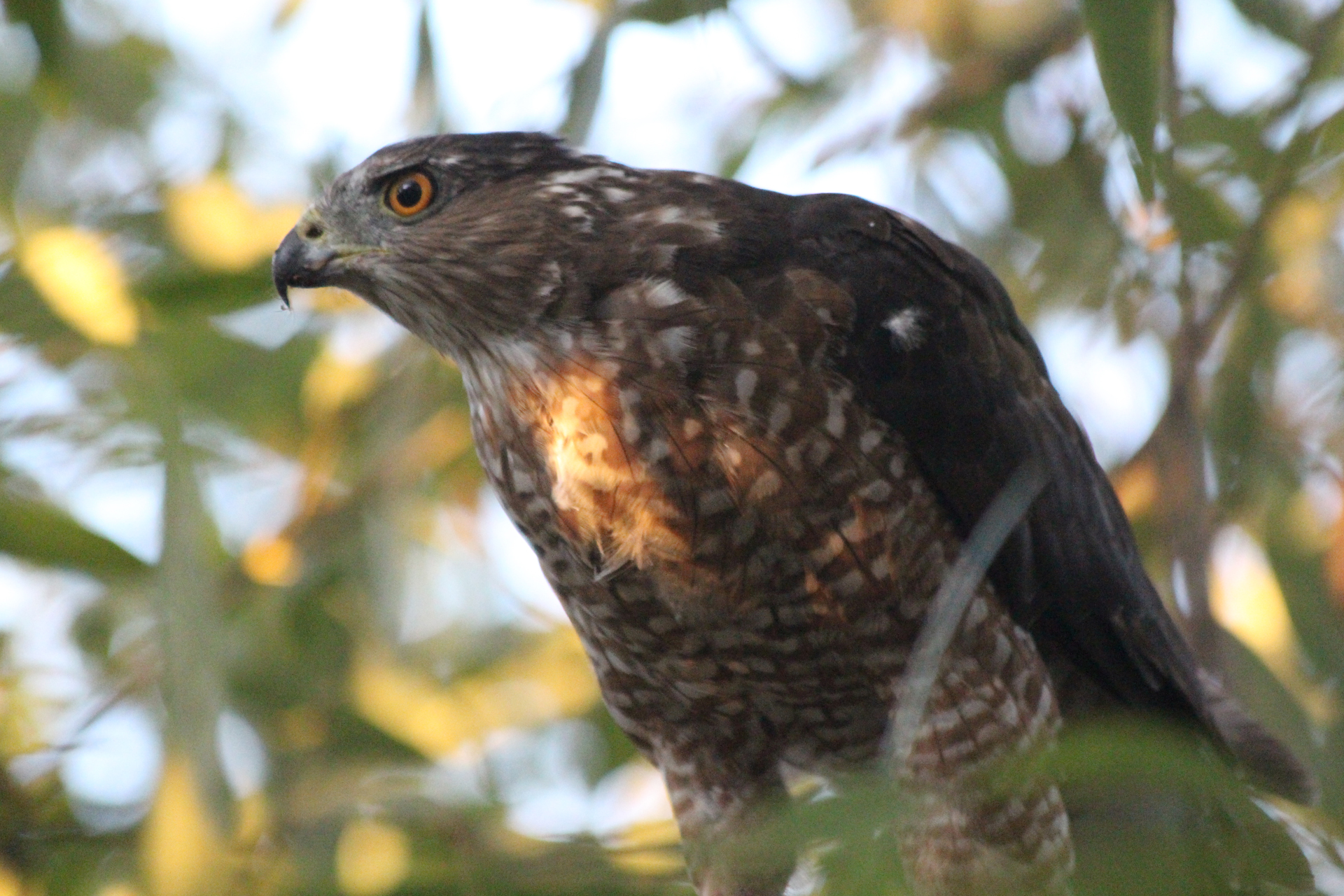
I believe this was a prairie falcon at sunset.

060614

End of part one. 


Sunday, December 27, 2020

Saying goodbye to 2020, may you FOF

This photo was taken in March of 2013. I ran into it again yesterday while purging 1,000s of images from my computer. In retrospect it struck me as a perfect visual metaphor for how I am seeing 2020.

Adios a La Pasada (Goodbye to the Past)